


I began designing crochet patterns 4 years ago this month (whoa!). Soon after I began selling patterns, I received the question:

Oh, dear. I hadn’t thought about that! So, I looked online to see what other designers did.
The majority of designers did not allow customers to sell the finished items made from their patterns. In fact, the policy seems to spread beyond indie designers: take a peek at the copyright notice in a pattern book or the small print on a McCall’s sewing pattern that you buy from the craft store.
The message is the same:

Surely these experienced companies must know something really important, right?
I, a newbie designer, followed suit. I replied to my customers that my patterns were for personal use, only. (don’t worry… this story has a happy ending, so keep reading!)
The Fear Factor
Why don’t many designers permit customers to sell finished items from their patterns? Let’s take a look at some of the reasons I read:
- Allowing customers to sell finished items allows factories in China to mass-produce your design, making millions of dollars and stealing your potential customers.
- If you allow a customer to sell finished items from your pattern, they could make thousands! And they only gave you $5! That’s not fair!
- What if you allow a customer to sell items made from your pattern, but the crocheter has very poor craftsmanship. Then this will reflect poorly on your design.
- If someone sells items from your pattern, it takes away customers who will buy the finished items you make!
- Allowing people to sell items from your pattern promotes the illegal copying/distribution of your pattern.
Boy… the designing world is suddenly a very scary place, isn’t it?
Everything I read suggested that if you allow customers to sell items made from your pattern, you’re signing the death certificate of your design company. Scary stuff!
But… do any of the items listed above seem a bit extreme? Uh, yeah… they did to me, too.
Having a serious think about the problem
After a while (as I gained confidence as a designer), it became less clear to me that prohibiting the sale of finished items from my patterns was the right thing to do. So, I looked at all of the reasons I read about, and had a really serious think about them.
Below are my thoughts about each of the points mentioned above.
Allowing customers to sell finished items allows factories in China to mass-produce your design, making millions of dollars and stealing your potential customers.
This is a really common fear amongst designers: that a factory in China (or Vietnam or wherever) will snatch up your design and mass-produce it without your permission. We see these knock-offs happening to designers of red-carpet gowns the day after an awards show.

But, here’s the important question for our discussion: is allowing customers to sell items made from your pattern make knock-offs any more likely? My opinion is: no. Firstly, the knock-offs that happen are knock-offs precisely because they are copying your design, meaning they don’t care if they have your permission or not. Put differently, your design can be stolen at any time. Secondly, if you allow customers to sell finished items, you are not also licensing out the mass-production of your design.
Finally, crochet is notoriously difficult to mass-produce. So even if a factory fell in love with my design, it’s unlikely it would be profitable for them to reproduce it. They would turn to a knitted/sewn design, instead.
If you allow a customer to sell finished items from your pattern, they could make thousands! And they only gave you $5! That’s not fair!
Let’s get serious. No one is becoming rich by hand-crocheting items from home. In fact, I frequently talk about how to make a profit at all!
The fairness issue is something to mull over. Some designers license their patterns to crafters. For example, if you wanted to sell owls, you might be charged a ‘cottage-industry fee’ (maybe $50) to get permission to sell items made from my owl pattern.
To resolve this issue for myself, I had to think about my customers. I made up a customer, Zoe:
Zoe represents my typical customer. She loves to crochet, and her family and friends have asked her to make some stuffed animals for them. Because she values her time, she wants to charge for making a stuffed animal. Let’s pretend that I charge her a fee. One of three things will happen:
- Zoe will think the fee isn’t worth it, and will use another pattern that permits her to sell the finished items without a fee.
- Zoe will decide that the fee is too expensive, so instead of charging for her hard work, she will give the animals away so that she isn’t ‘selling’ them.
- Zoe will pay the fee, significantly reducing her profit.
You see… most of my customers want to sell just a few finished products. Charging a fee would significantly impact their product.
And realistically, I want them to use my pattern! I love seeing people make items from my patterns. Why drive them away from my patterns by charging?
What if you allow a customer to sell items made from your pattern, but the crocheter has very poor craftsmanship. Then this will reflect poorly on your design.
Hmm… I suppose this is true. But frankly, people will crochet what they crochet and post the photos online regardless of whether or not they are selling them. And they’ll link to your pattern. Not sure what you can do about that.
The flip side is true, too! Customers will post beautiful photos as well! And oftentimes, the crocheter is happy to let you post the photo on your company’s Facebook page.
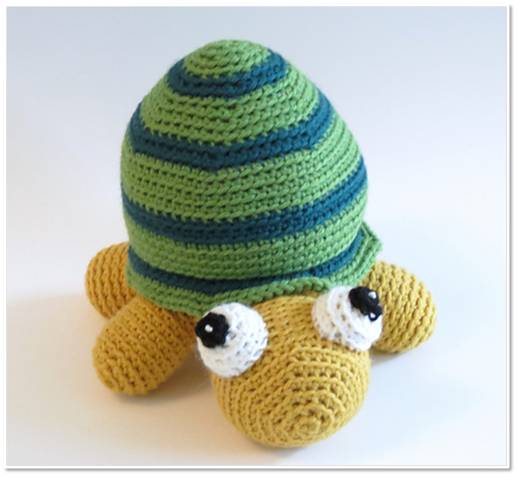
If someone sells items from your pattern, it takes away customers who will buy the finished items you make!
How severely this ‘scare’ affects you depends on your business model. My business is to sell patterns. I actually don’t have time to make many finished items for sale. So, if others sell finished items, it doesn’t take business away from me!
In fact, others selling finished items actually increases my business, because more crocheters are buying my patterns!
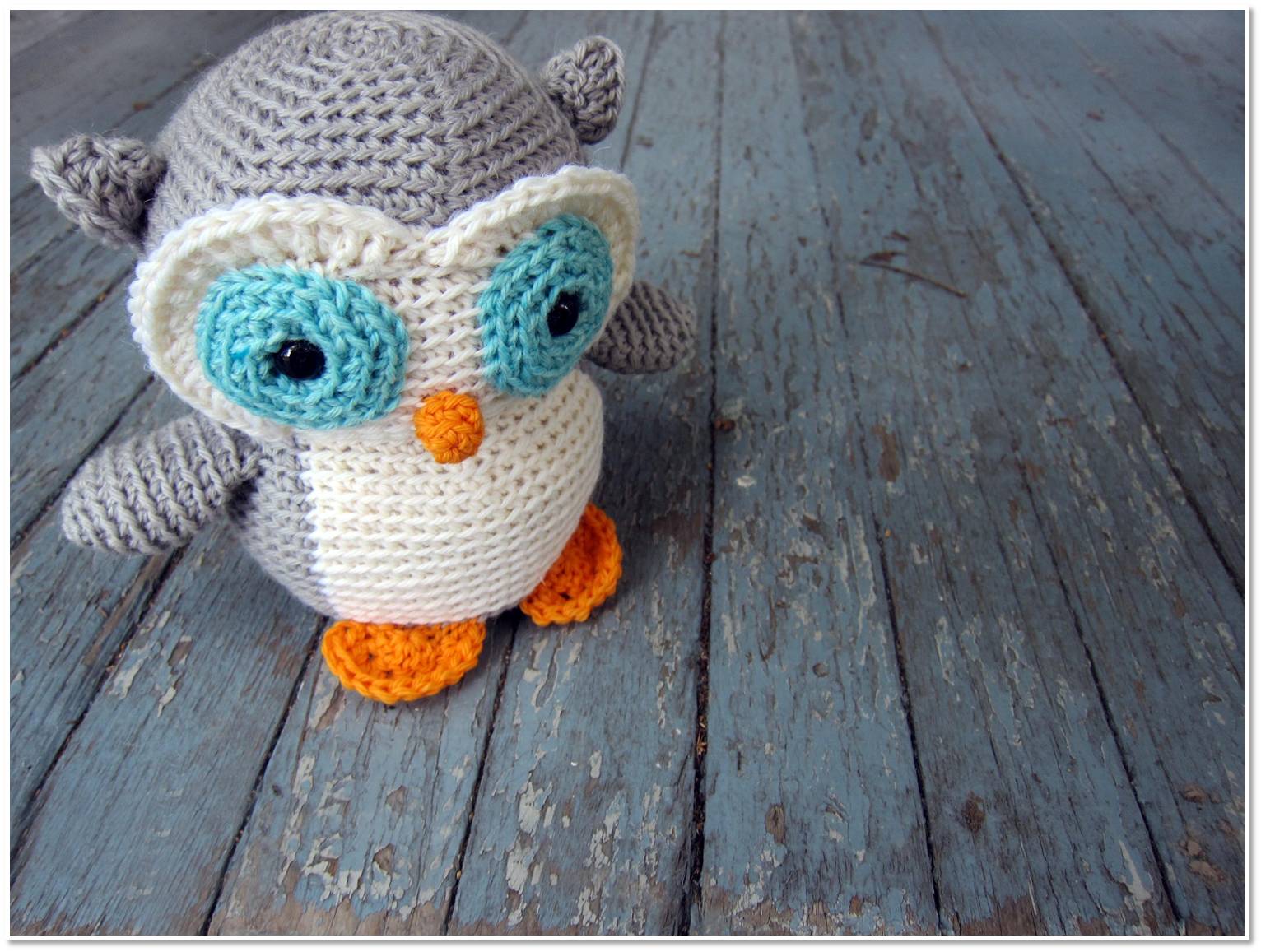
Allowing people to sell items from your pattern promotes the illegal copying/distribution of your pattern.
Uhh… I’ve read this a lot, but I just don’t understand how it could be true. People make illegal pdfs. But this is totally unrelated to whether or not you allow crocheters to sell finished items.
My policy
Have I busted all of those scary scenarios? I hope so!
I decided that, for my business, it was actually beneficial to allow customers to sell finished items from my patterns. Why?
- It results in increased pattern sales: from customers who choose my patterns over others because I permit the sale of items.
- I benefit from the increased number of projects connected to my patterns. If a crocheter makes 20 owl for sale, those 20 owls are listed on Ravelry, making my pattern more popular.
- Customers are often keen to share their photos with me, and posting these additional photos on my Facebook page shows the variety of colors that look great in my pattern!
- I am personally passionate about helping crocheters make a fair wage from their handiwork. By not charging a licensing fee, I am contributing to making stitching a viable wage-earning job.
- I couldn’t find any reason not to allow folks to sell the items!
So here’s my policy: You are welcome to sell items from my pdf patterns. I ask that you include a note about the item being a ‘FreshStitches Design’ on the tag (at a craft fair) or a link to my shop (in an online store like Etsy).
It makes me happy. It makes my customers happy. What could be better?
Chime in!
Are you a designer? What’s your policy and why?
Are you a crocheter? How does the ability to sell finished items affect your pattern purchases?
I want to hear!
Best,
Stacey
I’m a designer and I’m happy to have people sell work made from my patterns. My policy is that if they’re making the items themselves, they’re welcome to sell them. If they are hiring other people to make them, let’s have a firendly chat about scale and work out a reasonable licensing fee. If they’re hiring other moms to make them on a small scale that fee will be very, very low. If they’re having them manufactured at a factory in China it will be more. 🙂
Lets be realistic here. None of us have time to handmake a large quantity of items. Sometimes we want to knit something or crochet something from a pattern that 1. We don’t need for ourselves 2. Don’t have anyone to give it to or 3. Yarn costs money! I like to knit things in different colors and I have left over stash yarn that I need to do something with. The best way for me to not go broke and support my knitting hobby is to sell what I make. This was I can offset the price of what it cost me to make it. And I’ll buy more yarn. And more patterns. And knit more! I agree with your view and thank you for taking the time to lay this all out. I hope designers rethink their Stance on this topic and allow sales. You’re helping us and making everyone happy. I mean honestly. Do u know a rich knitter lol
Thank you for this thoughtful post! After my research and discussing the subject with other people in the industry (including Jenny Hart of Sublime Stitching, who has had her designs blatantly ripped off – she addressed ‘angel policies’ and licensing in a column – will link to it if I can find it easily), I decided to do a very basic license included in the price of a pattern, permitting the user to sell up to 12 items per pattern purchase. This seems to be generally acceptable; it doesn’t please everyone, but hey, I don’t expect to be able to.
There is one point in your post that I disagree with: crochet is actually horrifyingly easy to mass-produce. I make a point of taking a good look at crocheted pieces offered for sale in stores; they are generally very well made with good finishing, done in materials that I know can be very hard on the hands (e.g. plant fibers, thread). The tags often indicate that the pieces were made in China, Mexico, or another country where wages are relatively low and labor laws are not ideal. The worst part is seeing the price tags, because those are proof that the handcrafters were paid a very low wage. A cardigan made of cotton thread motifs selling for $30 retail is depressingly easy to find in the US. Can I prevent this from happening with one of my designs? Also depressingly, realistically I would have to say no. I don’t have the money or the resources to go up against a large company. My pattern licenses are mostly symbolic in that sense, and so I find myself considering the issue on a regular basis. For now, I’m continuing to do the license-included-with-pattern-purchase.
MK, you make a great point… and I was very sloppy in what I said. I meant to say that I did not know of a factory that machine-crocheted the same way that knitting is machine made. There are many cheaply-produced crocheted pieces, but to the best of my understanding, these pieces are cheap due to low labor prices… and they are still mostly hand done.
I could be completely wrong… but that’s the word I’ve heard, at least 🙂
I crochet, knit, cross stitch, plus a lot of other crafts. I have the nasty habit of once I make a design, I normally don’t want to make it again. No challenge is required for the re-make. So I do have lots of crochet items & knit items sitting around waiting for homes. Now, yes I do sell them. The cost is simply the cost of the yarn. *I am going to knit or crochet no matter what, so don’t really see he point of charging a lot for labor.* When it comes to patterns that I make from charged patterns. I do my best to contact the designer to see if it is ok. When the pattern is sold, then I make sure that the customer knows that the pattern is not my own creation & whose it is. I never sell more then three of a pattern without purchasing another pattern or sending money to the designer. If the designer has said no selling of the products made from the pattern, then I gift them to the person. Usually the person then gifts me yarn or something. Technically, I haven’t sold the item to the person, but those are usually commissioned items & they are the ones that bought the pattern not me. I know I am splitting hairs with this, but sometimes the designers are simply rude & won’t listen to anything or reach a compromise with anyone.
Thanks so much for your comments, Hev!
Thank you for this wonderful post, that completely clears up what your policy is! I LOVE that you allow items from your patterns to be sold, as that actually does influence my purchases in some of the patterns I buy. I don’t actively try to sell… yet, but I still get asked based off of friends seeing what I’ve made. I know that if I’ve bought a pattern that doesn’t allow me to sell items made from it that I can never sell anything if I’m asked, so I’m much less likely to buy the pattern-even if I really, really like it! Knowing that I’m allowed to sell items if I decide to definitely makes me feel better about spending the money on a pattern! Thank you!
Stacey, Kathryn Vercillo posted about machine-made/handmade crochet a while back (http://www.crochetconcupiscence.com/2011/06/is-there-such-a-thing-as-a-crochet-machine/). Short version: the crochet produced by the machine is not the same as crochet done by hand. The cheap mass-produced pieces in stores are indeed being made by hand. It may not be mass-production on the scale of machine knitting, but it’s still mass-production in my book. I’m not the only Etsy seller who has been contacted by a factory in China offering to mass-produce my designs with cheap labor. That’s a very different situation than a crafter who just wants to sell a few pieces to help pay for their hobby, but the legal system doesn’t really see much difference as I understand it.
I can’t seem to find a cached copy of the Venus Zine article Jenny Hart wrote about angel policies.
Thanks for the link, MK!
Like I said, I didn’t mean to imply that there wasn’t cheap crochet happening in the world. I suppose I meant that from a pure profit perspective, factory-sewing a stuffed animal is faster (and therefore cheaper) than a producing a crocheted one. However, your point is correct that any item (with the combo of cheap labor) can be made in massive quantities.
This is an excellent post! The free flow of information and inspiration is vital to the evolution of creativity. Artists have always sold their own reproductions of existing art in order to eat while they developed their own art, and it’s great to see more and more artists supporting communal creativity rather than proprietary fear 🙂
Thanks for clarifying your policy. You make some interesting points. I agree with Vanessa’s comments and while before I turned down some requests to sell animals made with your patterns, now I may reconsider.
Stacey what a wonderful explanation regarding copyright and selling items from your patterns. And I love the conclusion you have come to.
As one who buys other people’s patterns to make an item from their designs and occasionally wants to sell that item, I so appreciate your decision.
I have often thought along the lines that you have discussed. If I offer an item for sale and another crafty person sees it and thinks they could make that themselves rather than pay the price I am asking then that person will buy their own pattern, thus increasing your sales anyway. If someone buys my item and shows it to someone who is crafty who loves it, they too are going to search out your pattern to make it.
So to me it is a no brainer about letter others sell their work from your pattern. It is increasing your business, not decreasing it. In fact it is a form of advertising for you that you haven’t had to pay for and waste time on.
I just wish many other designers would have your same attitude so that we could all benefit even more from the crafts we love.
Good on you Stacey.
Joyce 🙂
As a crafter (not a designer), I have to say I really like Stacey’s attitude towards licensing her patterns. To be clear, I don’t intend to ever do more than “sell” a couple animals here and there. Friends and family get them as gifts, friends of friends get charged a nominal fee to cover the cost of materials.
But, knowing that I have the option to “sell” my finished product based on her designs, generates a huge amount of good-will on my part towards using her designs and promoting her designs and classes to fellow crafters.
Just my 2 cents on this whole situation.
Thank you, Tammy! It’s helpful to hear views from crafters!
As a fellow designer (with a lot fewer patterns so far, admittedly), I’m in complete agreement with you, Stacy. I don’t put any restrictions on selling items made from my patterns for a few reasons. First, I’m not sure that putting a licensing (not copyright, since this is a different issue) statement on my patterns would even be legally enforceable, especially if the buyer wasn’t aware of it before paying – and from what I’ve seen, that happens with a lot of patterns.
Second, I agree that it’s really not going to stop a company that decided to rip off one of my designs – I don’t believe my designs can be replicated by a machine by following the pattern, so they wouldn’t be using my actual pattern anyway – they’d be replicating the look, and while I haven’t researched in any detail, I don’t believe there would be any legal way to stop them from here in the U.S.
And finally, and an independent small business, I’d rather support other independent small businesses. If someone buys my pattern, I feel they have reimbursed me at the rate I’m willing to set for my effort. If they knit any item, that’s their effort, and I don’t feel entitled to a cut from it. I also don’t feel they’re cutting into my profits because we service two different groups of customers – I’m selling to DIYers and they’re selling to people who want finished items. Someone who wants a finished item and doesn’t want to do the work themselves isn’t going to buy my pattern anyway…but maybe if a DIYer sees an item knit from one of my patterns for sale, they’ll decide “I can make that myself!” and buy the pattern instead. So I would like the person using my pattern to credit it and me, but that’s the extent of what I would ask for.
Thanks, Jen! You said it beautifully!
Exactly how I feel as a crafter (not a designer). I always acknowledge that the design is not mine and put the name of the pattern and the designer on my tags that are on the items I have for sale. So, I don’t feel that I am ripping off the designer and am, in fact, giving them free advertising. What I charge for my items is usually just the price of my yarn X 2 so I can buy more yarn (and patterns) and knit some more!
So here is the thing. IF I decide to sell items, they are to …. friends, friends of friends, coworkers. I don’t sell on etsy or ebay. To be honest, I don’t sell much. I find that more often than not, I’m gifting items. There are the occasional offers of commission that come my way and I’m free to say yes or no depending on the deal (that is, how much of my time it will consume, how much I like the project, and how much the “customer” is willing to pay. There are times when someone will make a request and the price, to them, is appropriately (intentionally) too high, and they then rethink their request.
I’m very good at crochet. Not confident enough to be writing up patterns and looking for publishers, but I’ve created a few gems in my 40 years crocheting. IF I WANT TO MAKE YOUR PATTERN, chances are I can, by looking at it. Also, if I want to purchase your pattern and make a few to sell, you’d likely never know unless you live in my town and run in my circles.
Its REALLY stupid to think that people aren’t going to find “an adorable” pattern and immediately set about making several for family and friends and inevitably someone sees it and wants one, or 2, etc. It happens.
As the story above relates, people rarely get wealthy selling crocheted items. I work full time. If I happen to sell the oft hat or such, its to buy more yarn, or make someone happy.
Were I to write and sell patterns, I could care less who worked them up and made a fortune on them.
Great post! As a designer, in the beginning I had the policy of personal use only but as time went by I started seeing the trend change to allowing sales of finished items so I changed mine as well.
I can’t say really that I got more sales out of it but as I can see that makes happier customers so I’m happier too.
Thanks for letting your fans know where you stand. I love to use your patterns but I’m slow enough that they are great gifts. Or if someone wants me to make one, I just have them supply the yarn. I enjoy creating something that can be hugged and loved. I don’t care about the money.
So maybe I’m talking crazy, but I remember reading an article about this about five months ago, during a similar discussion, about the legalities of copyrighting, with some copyright law experts being interviewed.
It said that you can, in fact, copyright patterns (i.e. don’t sell or distribute the document) but you can’t legally tell someone what to do with an item that they created from materials that they themselves purchased. Something analogous to/in the vein of ‘not ruling from the grave’… I wish I could find the link, because it struck me as very strange at the time…
That being said, I am someone who loves rules, and I support my independent designers, so if someone’s policy is to not allow sales, I follow it 🙂 But I appreciate when designers trust me to do the right thing, too.
Happy Hurricane, chica. Stay safe!
@Ellen-
Yes… I totally didn’t want to get into that issue in the blog post (because it’s very controversial), but my understanding of copyright laws is that you can’t ‘copyright’ a pattern so that finished items can’t be made.
From what I understand, however, you can establish rights… and if it’s clear before the purchase of a pattern that items can’t be sold, then the purchase of a pattern means that the buyer agrees to the arrangement. Anyway, I’m not a lawyer, and I totally don’t want to get involved in all that!
YOU stay safe!!!
I studied copyright law in college as it relates to fine art and was confused about the packaging “agreements” I was finding on patterns that I was purchasing. I was really disheartened to see pattern makers attempting to discourage people in such a profoundly deceptive way. Basically, the pattern it’s self is the only thing that is protected; so the physical pattern cannot be reproduced or redistributed which is totally acceptable. However, the product created from that pattern is your own. This is no different than if I created a pattern to create a clay sculpture. If I sell the pattern, the resulting product from my consumer is their own and they can sell it without my permission. I hold the right to the pattern/instruction. That being said, I can understand the work that goes into creating a pattern and the desire for others to not profit from your hard work. However, I would get more pride in knowing I created something that others found valuable enough to want to make for themselves and others. I still feel uneasy when a crafts person displays a notation on their pattern that it should not be used to create items which will be sold and typically don’t bother buying it. It isn’t that I intend to sell everything that I make but I like having the option to if I really find myself enjoying the project or having friends request something that I’ve made. I want to be respectful of other crafters and artists… it is such a delicate situation.
I found this site that helps breakdown copyright law for the topic of patterns for clothing and crochet.
http://www.tabberone.com/Trademarks/CopyrightLaw/Patterns.shtml
Thank you for contributing, Ashlee!
EXACTLY! I totally respect the designers’ talents and will NOT sell or give away copies of a pattern I have paid for. I will tell someone where to find it online or in a book. But I agree that whatever I create from the pattern I purchased is mine to do with as I please. And, as someone else has mentioned earlier, how will the designer even know that I’ve sold a couple of items I made with their pattern? It’s not like I’m going to mass produce them myself or have a sweatshop of little old ladies in my basement cranking them out! To me, it is a compliment to the designer that I think their design is beautiful enough to think that someone would pay for a finished product I made using it!
According to what I’ve read on copyrights (I am a graphic artist), patterns cannot be patented. They can be copyrighted, but it’s very hard to do, and very expensive. Most people who “create” cutting patterns of any sort, won’t be able to do so. The ARTWORK (design) CAN be copyrighted, thereby making it illegal to share, sell or distribute the pattern in any form, but the pattern or mechanism of action cannot be. Therefore, when you sell a pattern, you cannot LEGALLY restrict the number of finished products the buyer of your pattern can make, nor can you dictate what they can do with the finished product they make, (if they want to give away, sell, trash, burn etc.). The finished product becomes the property of the maker, not the seller of the pattern, and the maker can do whatever they want with their own property.
It is also not legal for someone to charge a “commercial license” fee, giving you “permission” to sell what you make from that pattern, because again, the finished product made from the pattern belongs to the MAKER. I shake my head every time I see this, knowing how these sellers are making a small fortune, ILLEGALLY, from unsuspecting buyers who are not educated on the matter. Even “larger” companies selling paper craft designs are illegally demanding this fee (including internet based “businesses”, with websites, Etsy and Ebay stores, blogs etc., some having thousands of followers).
Give credit to the pattern maker if you WANT to, but you cannot be FORCED to provide a link back or list the person who created the pattern. You are selling YOUR work, not theirs. EVERYBODY loves free advertising, and thats what you’re doing. Use your efforts to advertise YOUR work, not the works of someone else.
The best place to learn about this topic relating to the United States, is the USPTO.gov and copyright.gov websites. Other countries have their own copyright rules and information.
Yes.. Thank you!! I
This is great to read! It is impossible to get rich selling handcrafted items (at least in my experience) because nobody is willing to pay for the time it actually takes to make something (and that’s without taking materials into account!) I LOVE your patterns and have sooo many of them and want to make them ALL, but there’s 1.) Only so much space in my son’s room for stuffed buddies, and 2.) only so many people to give gifts to (specifically stuffed animals). I crochet your patterns first and foremost as gifts, but if there is a “dry spell” where no one is pregnant, having a birthday, Christmas, etc. I still WANT to crochet so at that point I will sometimes make a commissioned animal for the odd $20-$30. I just got hooked on your patterns this summer and at this point I’ve sold THREE and given SEVEN as gifts. I’m definitely making $1000’s! 😉 lol (okay, so I’m just supporting the habit…)
I always wondered what your guidelines where. Personally I just love croching your animals. so i just ask that when people want a creation from me using your pattern. I don’t ask for money. I ask for two skeins of yarn. That way I use some of one of the skeins to make their animal. and use the rest to make free ones and other projects! I consider it the bargaining system. And money rarely crosses hands. Heck if anything a hook does! Because everyone I make for, soon wants to learn how I did it. and it helps YOU get a new crocheter to download your patterns, and helps me get more yarn and a new crochet buddy!
I’m not a designer and don’t currently sell finished items, but I like your policy. It makes sense and is a breath of fresh air. Yes, copyright infringement happens. It will always be so. But there seems to be more fear out there than is justified.
I am a designer and personally love to see people selling items crocheted from my patterns. I’m so grateful that I’m able to help support my family by designing and selling my patterns. Seeing others sell the items they make with my patterns makes me happy to think that my designs are helping them support their families too (or at least their crochet habit). Thanks for this post.
I agree 100% with everything that you said in your blog. I was just asked last week by someone if they could do that as they are going to start an Etsy store. And agree that crocheting is hard to mass produce so that’s not a fear at all.
This is a great post. I currently have a “personal use only” on my patterns, but your model makes a lot of sense. I think I’m going to change mine…
I’m a knitter and I’m not tempted to sell anything but that “no sale” policy so many designers have still bugs me! I have the skill to make whatever I want to make (and the money, it is the time that is lacking!), but there are loads of people who can’t make things for themselves. It seems to me that it only benefits the designer if finished objects can be sold, and I don’t understand what people are so afraid of.
I’m finally learning to crochet Amigurumi thanks to your Craftsy course and stumbled open this post. I agree with one of the earlier comments, your perspective on this matter is a breath of fresh air. I love making things for others to enjoy and recently decided to help support my family through selling items at local craft shows. I usually use simple stitch dictionary patterns or free LB patterns (they allow you to sell items using their free patterns).
I don’t have the design chops yet to make intricate patterns so it’s nice to be able to use nicely designed patterns to make items. This way I am able to sell nice items for others to enjoy, I support my family, and I learn from the designs. One day when I become a designer I can credit those whose patterns helped me to get there.
I personally feel we’re all in this toegether as a community and the more we help and support each other the better our community will be. So, thank you Stacey for your wonderful designs and support. I can’t wait to make wonderful stuffed animals for others to enjoy!
Copyright law states that once you buy a pattern, you are free to sell anything you make from that pattern. Selling licences is just a way to con customers out of some extra money. It’s totally unethical, and even if I have no plan to ever sell anything from it, I will never buy a pattern from a maker who sells them. I will not support deceptive people. http://www.tabberone.com/Trademarks/CopyrightLaw/Patterns.shtml
Also, “personal use only” is not legally enforceable. Again, once you sell a pattern, the purchaser is free to do with the final product as he/she sees fit. You can ask that people not sell it, but that’s the best you can do legally.
I occassionaly have my ami designs published in a craft mag here in Australia. I love to crochet and I love ami, I have tried selling my patterns at the local markets but have more luck selling the finished toy. I don’t mind people making and selling from my patterns but I do mind if they say its their design. I put a little blurb on my patterns that I don’t mind if they sell the finished product for charity and if they must use it to make money for themselves I would appreciate me being recognised as the designer and for them to link back to me.
I did come across someone on Etsy selling dolls made from my patterns and a quick email saying how much I loved what she had done with the pattern (it was from one published in the mag) and could she please put a statement on her page saying I was the designer resolved itself very easy, she was happy to do that and then we were all happy.
I always contact a designer if I want to sell a few items made from their patterns, I’m not going to be making heaps of them, I get bored pretty quickly with the same designs.
So many patterns are similar, it would be hard to say who the pattern actually belonged to. I know of someone who had an issue with someone copying her patterns and saying they were their own, it was only when it was discovered that she had copied word for word – including the mistake that the original designer had made – that she stopped.
On my embroidery designs that I had published I always put my initials worked into a flower or as part of the original design, only I knew where they were and I longed for the day when I could march up to someone at a craft fair and claim my design, it never happened and I stopped being paranoid.
It was a very interesting article you wrote, certainly made me think. Some of the replies also gave me food for thought. I always underprice myself and have just worked out that i am getting $3 an hour for the work I do. I am frequently told I am to cheap and I need to value my work more, maybe I should.
I have noticed in a few designer decor shops here that they are selling ami’s that have been made over seas, not always China – they have a label on them saying they have been made by a womens group in the third world to help them make money to feed their families, but I have also noticed the same designs in some shops having a made in China label on them and no mention of a womens group, so who do I believe. Both designs are overpriced, there is no way I could charge those prices…….so why would someone buy that over mine which is half the price and locally made. If I wanted the shop to sell my things they wouldn’t buy at the price I wanted if they were going to put nearly 100% mark-up on them. I made flower brooches for someone to sell on their website, she sold them for 4 x’s what she bought them for, she sold heaps and when I tried to sell them on a market stall I couldn’t sell them for half that price, I was told someone else was making them and selling them in a shop in the city and they had bought them there. Turns out they were my brooches. I was acknowledged as the designer on the website but not in the shop.
Like everyone else I’m not going to make my fortune at this, I get pleasure from what I do and if I can spread a little happiness around with my designs then thats okay by me and if they want to return that happiness by paying me lots of money then thats okay by me as well.
Thank you so much for all of your thoughts! 🙂
I have a question for you: What makes a design yours? As in I can look at a photo of someone wearing a crochet top and reproduce it not by pattern but by sight. By what stitches I would use with out a pattern. Is this then unethical and bad manners?
I do use patterns but I also get asked to make things for friends by being shown a photo. What do you think?
Oh and this is for me to do the right thing, not as a lock up your design thing. i guess that seeing as a pattern is a combination of stitches what stops someone from changing the design and ending up with a something that looks close to your design but is different? As in how many different patterns are there for crochet flowers that use different stitches but look the same?
what if you are inspired by what someone else has done, you do not by a pattern and you make something?
I am looking for answers for both my own work and my own patterns.
That’s such a great (and tricky) question. I’m honestly not sure what the right answer is. If you see a picture, and can find the pattern for it, then of course, it’s best to follow the pattern and reference that designer’s work.
However, I know that with Pinterest and other sites, it can be difficult to track down the original source.
I would hesitate to profit from another person’s design (even if it’s just from a photo). To stay on the safe side, I much prefer coming up with my own ideas so that I’m not stepping on anyone’s toes.
Crochet is hundreds of years old and so are the stitches and stitch patterns. So many stitches, stitch patterns, and techniques cannot be copyrighted, and anyone is free to use them in one’s work or own design. You’re right about flower designs being so similar, but there’s only a limited number of ways and techniques to achieve various effects. Again, I don’t think anyone need worry about copyright in those instances. It’s the overall design that is copyrighted, not individual methods or techniques. (And methods or processes are specifically not copyrightable anyway.)
Yes, you’re right. I wrote this post with complete designs, and not specific stitch patterns in mind.
Based on my understanding of copyright law (I looked it up on http://www.copyright.gov) there is nothing in the law that permits a designer to restrict the end use of an item made from the designer’s design. The pattern is copyrighted, not the item. (Unless the item can be considered a work of art, like a sculpture, it cannot be copyrighted.) So no one can legally (i.e. in court) prevent anyone from selling an item made from a pattern (also called First Sale doctrine); they can only prevent a person from copying or selling the pattern itself.
The sticking point is whether restricting the sale of a finished item is a term of the purchase agreement. For example, most commercial sewing patterns state that the finished item can not be sold, and by purchasing the pattern, the purchaser agrees to these terms.
Great blog! I agree with everything here. I think some designer concerns are over the top and they need to remember that if people are selling the items made from their patterns and crediting you as the designer then that is free advertising. You can only grow. Limiting your customer base can never be a good thing. 99.9% of a crochet designer’s customer base is going to be one person making a few items to make a small amount of cash. As a designer myself I want to promote small businesses and individuals trying to make some money in these hard times, so any items made from any of my patterns can be sold in my customer’s stores, no problem.
Thanks HappyBerry! I think you make a great point… there’s an idea that there are thousands of factories trying to mass produce your items, but really… most of the customers are (as you say) just trying to make one or two items to sell to friends/at a small show. It’s important to keep perspective!
You make some very good points, and i am glad you decided to talk about this topic, because I also struggled with that issue when I started selling patterns. I was worried about the same things you mention in your post. I was also worried that a “do not sell” policy would turn people away from buying the pattern. After giving it some thought, I decided to let people sell the finished dolls, as long as they do not take credit for the pattern.
Wow Stacey! Thank you so much for your generosity. I am just starting to make stock for my Etsy store which will entail a lot of things, mostly sewn items. I just purchased your Crafsty course on the Woodland Animals and thought that type of product would be an awesome item to sell. The fact you make your patterns available for sale is just wonderful and so generous. I love owls so I’ll definitely be buying that pattern (and likely many others!) to include in my shop. Again, thank you! 🙂
(omg I typed so many things but accidentally pressed the back button waaaaaaaa.. Okay I shall retype whatever I can remember…)
Firstly,
Stacy you’re really the first crocheter blogger that I really love. I love your lessons I love your videos and I love the way you think! It really opened up my mind a lot (even though I know for sure if I made a pattern I will allow people to sell their products anyway cause THEY made it and people don’t allow that frustrates me ha)
I really need some answers and I hope some crocheted here may know it. I’ve been researching about it and come to no avail… I found some examples similar to it? But there’s just so many different answers Idk who to believe..
Is it alright if I sell a superman/Disney character inspired crochet pattern?
I’ve read that as long as you are REPRODUCING the logo/trademark of a certain big companies (who is copyrighted or smth) you are actually infringing copyright..
But what if you’re INSPIRED by it, and drew your own superman and make a crochet pattern out of the one you drew? even if it’s a chibi version with different height and different muscle size?
Some say it’s worse because you’re making someone else’s trademark as your own… (but I’ll definitely say superman inspired! Still no?)
Some people say that as long as you made it clear that you are not in any way affiliated with the company or smth like that it’s fine (apparently because if you made an ugly version of etc superman they will think that OMG THE SUPERMAN IS SO UGLY IM NOT GONNA SUPPORT DC AGAIN which is pretty unlikely to happen but yeah….)
So I’m pretty confused and upset right now CAUSE THERE’S SO MANY PEOPLE SAYING DIFFERENT THINGS… I hope there are crocheters here who REALLY knows smth about this and can help me..
I apologise for the long and naggy post and plus it’s kinda out of topic? But I need some answers… As im making superman for my boyfriend, with my own design and drawings (basically just inspited by the pics and all of superman) and wouldn’t it be better if I can make a crochet pattern of it and sell to make some profit to support my supplies for crocheting… :/
Thanks for reading if you did..
Xinman
Hi Xinman-
Thank you for your compliments!
Unfortunately, I can’t answer your question, because I’m not a lawyer, and I don’t know all of the details of the law.
All I can say is that I would feel very uncomfortable selling toys of a trademarked character. I’m not sure where the line is between inventing your own character and being inspired…
Sorry, but I can’t give you a more clear-cut answer!
.I used to create bear patterns, now I create bag patterns and did not put them out into the mainstream because you cannot copyright them .. once I release that pattern to the public, it’s the public’s pattern to do with what they want … it’s no different than a quilt .. no, I cannot take YOUR instructions and copy them and put my name on them and pass them off as being mine .. but, if I make a quilt from your pattern, the quilt is mine to do with what I want .. be it ten or one hundred .. I made the quilt ..
The whole point of the first sale doctrine is that once the copyright owner places a copyrighted item in the stream of commerce by selling it, he has exhausted his exclusive statutory right to control its distribution.
Quality King Distributors, Inc. v. Lanza Research Int, 523 U.S. 135 (1998).
Making items from our patterns for sale violates our copyright policy.
Federal courts agree that copyright owners have ONLY those rights granted to them by statute. Therefore, US Copyright Law dictates what “copyright policy” is, and is not. The pattern designer has NO say concerning the use and further disposition of the article that has a registered copyright once the designer/manufacturer has releases that article into general commerce by selling it or by giving it away. And, once the designer/manufacturer places the pattern to make the copyrighted design into general commerce,, that designer/manufacturer is giving the new owner the right to make the “designs”. Again the Supreme Court:
And originality is a must for a copyright. Simply taking a variety of quilt blocks and laying them upon a surface lacks creativity. And there is no such thing as changing a design or pattern by a certain percentage to make it yours. If a reasonable person would look at your creation and say it was copied from another design, that is copyright infringement. Don’t fall into that trap.
Actually there is no legal limit to how many copies of a pattern one can make for their own use if they are being consumed in the process of making something. The key here is personal use. Giving away copies is infringing. As for classes, there is no such thing as implied permission. Either the instructor reserves all rights, in writing and signed by you, or the instructor doesn’t. If the instructor does not have you sign anything that restricts your use of any patterns or course materials then all use is governed by federal copyright law not by the desires of the instructor. As such, you do not require special permission at any time to sell the quilt made or to display it.
One fact that escapes most pattern users is that patterns generally are not registered with the US Copyright Office. This means two things to a pattern purchaser. First, that the pattern manufacturer cannot make a copyright infringement claim in federal court if it has not attempted to get a copyright registration. And second, patterns are not generally copyrightable so any claims made by the pattern manufacturer about the purchaser having to follow any restrictions imposed by the pattern manufacturer are not legally enforceable.
Keep in mind that the end product of the pattern does not matter. A pattern is a pattern. Whether the pattern is for clothing, quilting, embroidery or making a birdhouse, it is a pattern. And if the pattern were to have copyright protection, that copyright protection does not cover any articles made from the pattern. This applies to free patterns, purchased patterns or patterns given to you as a gift.
Most designers don’t realize this and the rest just don’t care … then there’s the ones who try to get you to buy an illegal Cottage License .. don’t fall into THAT trap either!!
Thank you for your detailed comments, Toby! I think your comment further illustrates that it’s a very complicated issue!
The bottom line is don’t be sucked in by Cottage Licenses or Limited License Agreements they are illegal. Also what you make from any pattern becomes yours to do with what you want. When I confront designers on this, after 2-3 emails they never write back!!
If anything, Toby’s comment clarifies this issue tremendously… It doesn’t at all imply that it’s complicated. It’s very simple… Designers, regardless of your personal wishes, the law says your copyright extends only to your pattern, not finished products. If this is disagreeable to you, do not publish your patterns and instead only sell the finish products. You cannot control what others do with finished products made from your pattern, you can’t even demand design credit, as the kids say these days, full stop.
Pingback: Should you let customers sell items from your patterns? « Bitter o'Clock
Thanks so much for this post- it’s an issue I’ve been considering for ages now, since designing my own crochet patterns too.
I agree that customers should be able to do anything they wish with the finished product. Especially, because even if the PATTERN is copyrighted. That copyright only extends over the actual pattern (PDF, email, etc.) It does NOT cover the finished product. Just like when you sell the pattern you’re sure to tell them that it’s just the pattern not the finished product. Copyrighted patterns are to make sure that your own pattern isn’t being distributed illegally (for free). Cottage licenses and Angel policies are dreamed up by upset designers. It’s been going on for awhile, but they actually cannot do anything about what you do with the finished product, because the copyright only protects the pattern itself. http://www.tabberone.com/Trademarks/CopyrightLaw/Patterns.shtml
Granted, some people will not buy, or look down upon, things made from someone else’s pattern if it’s a widely known pattern. I just wouldn’t sell from someone’s pattern that didn’t want me to. Simply to avoid the anger and drama. I, myself, make my own patterns and I haven’t made any of them for sale, yet. But, I wouldn’t be bothered with someone selling form my work. It would be and honor and I wouldn’t have a leg to stand on. People try to say these cottage licenses or angel policies or licenses are real, however they are not! But, some people pay these fees, because they simply do not know. That is ripping off customers. And some designers may not know, but I’d expect if they were selling patterns they would have looked these things up. I have yet to sell any of my own designs, but I’ve already looked it up. Besides, you really can’t police people all the time. You’d spend all day trying to track people selling your ideas, and when you finally found someone, you wouldn’t be able to do anything about it legally, unless they were redistributing your pattern for sale or for free. But, most patterns while copyright protected and not copyrighted themselves. Look at the article I posted and here’s another article discussing the so-called licenses: http://www.tabberone.com/Trademarks/CopyrightLaw/Licensing/AngelPolicy.shtml
I’m glad you’re okay with having others sell you items, I’m not attacking you here. You just also mentioned the “licenses” which are not valid in law.
Thank you so much, Crystal, for posting that clarifying information!
I have been wondering about this for a while. I may not agree 100% with all your points, but I guess my main issue was mostly people who’d be claiming the creation was entirely theirs, without crediting the designer (as I’ve seen many times).
Your blog got me thinking again about it all, and I’m changing my policy now, just adding 2 conditions : that the item to be sold was made by the seller and that they credit my name and pattern. This way I hope all parties should be happy. I will. 🙂
Yes, that sounds perfectly reasonable! I, too, ask for the person to credit me, but I think it’s just a favor and I’m not sure if I really have any way to enforce it! Most people seem perfectly happy to do so, though 🙂
Thank you for this! I sell the items I make, but in no way am I making thousands. Not even close. I just enjoy trying new patterns and really, I get bored from making the same thing over and over. At most, I think I have made 3 or 4 items from the same pattern and then I move on to something else. I see it as a huge compliment to the designer when I choose their pattern because it is obviously beautiful and worth seeing in front of me. I hope to write my own patterns soon and would be thrilled to see others make what I create!
Pingback: Interview with Stacey Trock of Fresh Stitches
I’ve actually read a few other blogs that have done their research legally, and apparently, regardless of if you want them to sell the things they create from the pattern or not, they still can. Even if you COULD get a copyright on your pattern (which you can’t), that copyright would ONLY cover the pattern, not what’s created from it. That’s like Disney saying that you can only color their coloring books in certain colors. (http://www.tabberone.com/Trademarks/CopyrightLaw/Patterns.shtml) (http://www.tabberone.com/Trademarks/CopyrightLaw/FirstSaleDoctrine/FirstSale.shtml)
Well, I guess this is what I get for not reading the other comments first. I just repeated what Crystal said. Sorry.
Once I found out that there is actually no legal standing (what was said above by Crysal, far more eloquently than I would put it) the designers that stipulate what can be done with their designs began to rub me the wrong way.
It just really grates my berries when people attempt to take advantage of the ignorance of others. Now whether I’m making an item to sell or as a gift, the designers that have the audacity to make up their own laws don’t see a dime of my money. If I want to make something wherein the pattern in question is the only to be found and it includes stipulations on the final product, I pass on it and make my own pattern.
I’ve been working on getting my patterns into a legible format (instead of the scribbly nonsense that is only understood by myself) and once I start to distribute them, they’ll be open to crafters to do as they wish with them. After all, that is the LAW and as a business (and a human being with morals) I’m inclined to stick to the law and not just willy nilly make up my own.
Hi Stacey,
Thanks for addressing these issues. Your approach is so logical, realistic and fair.
I am not a designer but if I were, I would only sell those patterns that did not have any special meaning to me. And thoes I sold would allow CU because people do need to sometimes make up the cost of their yarn etc.
However those that were very special to me I would not share as a pattern, at all. Or then only in publications which have a non-commercial blanket rule which people follow.
I wish more people had your generous attitude.
what irks me is when you buy a pattern which doesnt clarify restrictions until you have bought and downloaded the pattern. Then its a bit late. 🙁
I do both your classes on Crafty and I especially like Design your own Amigurami class. Your approach is empowering and helps someone understand WHY they are doing something. You actually explain the reasons rather than spell out a recipe.
There are umpteen crochet books and patterns but none explain these first principles.
I too would prefer to make my own patterns rather that copy another persons design but I do not have the knowledge to get the math to work out. I like that you explain the basics of how to create 3D objects, like a sphere for example, so that someone can make something on their own, minus a pattern. I have not encountered many resources that share this sort of knowledge and help people to write their own patterns.
Do you learn from trial and error? There seems to be a logical mathematical approach to designing (a motif for example) but I have not found that explained anywhere nor have I worked it out. I am learning by following patterns but I wish there was a course or resources tackling the logistics of 2d crochet as well.
This blog and follow up comments have been truly useful. Thanks again.
Divya
Hi Divya-
Thanks so much for writing!
Yes, a lot of my learning is from trial and error… I think that’s how a lot of people build their knowledge. It is probably why many people find explaining the first principles difficult 🙂
For those of you interested in this topic, Abby Glassenberg’s blog has a far more detailed post: http://www.whileshenaps.com/2014/03/can-you-copyright-a-sewing-pattern.html
If anyone bothered to actually read the laws regarding this subject you would know that only the written pattern – including it’s pictures and graphs – are covered by copyright protection. And that protection is immediate upon conception of the pattern, you don’t need to apply for copyright protection. But that protection expires after set number of years unless you apply & then apply for an extension through the copyright office.
If you didn’t want anyone to copy your design, or sell works made from you design, you need to apply for a design patent. And you will never receive a design patent for a crochet pattern or sewing pattern – a case covered by the Supreme Court in the 1800s pretty much made this a fact. Design patents MUST be applied for. You cannot sue for infringement of your design (suing someone for selling the item made from you pattern) unless it has been applied for and APPROVED. Not only that but if you display that a design is a protected design under law you are violating the law and are subject to a fine of $500 per violation. So to all of you saying this is a protected design and you may not sell things from it under penalty of law – you are breaking the law and you can be sued.
Go to the us copyright office website and the us patent websites and research for yourself. They provide the real information on all of it. Don’t believe the “licensing” agreement nonsense published on the internet. And no state can enforce any state legislation to that effect either – these were deemed unlawful and unenforceable by the Supreme Court.
Thank you for your detailed reply!
I am doing research on making crocheted items and selling them at a local craft fair. I am grateful you will allow me to use your patterns with proper notifications to the pattern origin and owner. I have read a lot of mix reviews on copyrights. Mostly I am reading that someone does not have ownership over the finish item. I am still in the middle of my research to see what is most accurate. I will say that despite having ownership over the finish product or not the person who makes the product should always make a note about the pattern designer. Yes you might lose a little business if someone goes online finds the pattern and makes it themselves, but I see a lot of people post patterns on Pinterest asking someone to make it for them because they do not have the skill or the time.
Being I refuse to break the law I will continue to research copyright laws. I will hopefully be able to sort through all the “yes you cans” and “no you can’t” and get to the truth.
Thank you for writing about this topic and being able to see all the perspectives. I’m actually a knitter but of course this is just as relatable. I love knitting, but I’m also pretty broke, and as others have said, because I spend a LOT of time on it I want to be able to make some money from it. To me it’s strange that a designer will say “here, you can have this pattern for free… BUT WAIT it’s super conditional as to how you can actually use it!” I get that they made it, they can decide how they want it to be used, but that doesn’t stop me from finding it aggravating. What really gets me is when I *pay* for a pattern and then see the message on the file once I download it that I can’t use it to sell. In my opinion, once I’ve paid for it, I should get to choose how I use it. I get it, it takes more work to design than to make, but still… I don’t buy a plate and get told exactly what foods I can use the plate for AFTER I’ve bought it, to me it’s a similar situation. I guess that now before I buy a pattern, I will have to contact the designer to check what their policy is…
HI, have been reading through a lot of comments but not all, so maybe somebody already asked this…
I’m a knitter and I crochet amongst other things and get lots of nice comments from people on what I create and make and it had me thinking…
Because a lot of my friends ask me to create something they found online, or they have a pattern somewhere and they can’t make it themselves… So I do, but lately the demand has increased and I started wondering if I could actually set up a little online ‘request’ shop, where people could ask me to make what they themselves can’t.
But then we get to the copyright issues and as stated before the lines are blurry.
What if I have a few selfmade items as example up (so photos of my own versions), complete with links to original patterns, sites, creators,… and people get to buy the finished product of it, made by me, but custom made to the buyer’s liking of colour or size, or maybe part A of item 1 with part B of item 2… It wouldn’t be big, just a few items each week/month depending on difficulty and ‘pocket money’ wise just to get the costs out of the way and shipping done…
What would be the best way to go about it? Ask each for permission? Also, a lot of items (as posted on Pinterest) are sometimes just the photo and I can somehow create it by looking at it, how am I to know who the original creator is? Will I get in trouble then if I sell my item?
I’m based in Europe, so maybe that changes too depending on where you are located?
thank you for raising the subject anyway
I think the best policy is always to contact the original designer. You can sell items made with any FreshStitches or Shiny Happy World pattern, but other designers have different policies. As far as recreating something you see in a photo – try doing a Google reverse image search. It’s a great way to find the source of an unattributed photo you find on Pinterest or elsewhere. There’s more info here. https://support.google.com/websearch/answer/1325808?hl=en
I think this is a very good way of doing things. And if I was to ever use a pattern I would be sure to send credit to the designer for the pattern because they put just as much hard work in if not more as the person making the item 😀
Is there any chance you could email me ?I have a few questions regarding something I’m in the process of setting up.
Hi! Quick question that’s completely off topic. Do you know
how to make your site mobile friendly? My weblog looks weird when viewing from my iphone.
I’m trying to find a theme or plugin that might be able to resolve this problem.
If you have any recommendations, please share.
Thanks!
I’m not sure. It’s an “adaptive” theme, which means it’s supposed to be mobile friendly. A lot of time that does make it look different on mobile (like compressing banner menus into dropdowns) but all the changes are supposed to make it easier to navigate.
Oh my gosh! Thank you so much for this blog post! ^_^ I’ve only been crocheting for 2 years now and I feel confident enough now to try and sell things at craft fairs and maybe online. But when I would google all the legal stuff a lot of designers are very upset about others selling finished items from their patterns. At this point in my crochet journey, I don’t feel I know enough to create patterns. So that really was a downer. But reading this has lifted me up a little higher that I know what to look for. (designers like you who who let people sell finished products as long as you’re mentioned on the tag as the designer) I definitely will be looking through patterns of yours to purchase and will spread the word to others who are looking to buy patterns or others who are feeling down about wanting to make things but can’t create patterns to visit your blog! Thank you! 🙂
I actually found this post while looking for an awesome designer like you! So many patterns available won’t let you sell the items you make. I am not a fast crocheter, but I would at least like to recover the cost of yarn. I make one or two items and move on. Definitely not a mass-producer. It does steer people away to have that disclaimer, especially if they’re starting out like me. I’m not going to pay for a pattern that I can’t use. I’ll go somewhere else. I’ve saved your blog and will definitely be buying patterns from you. I personally have trouble with designing, so it’s kind of like a symbiotic relationship. I get a pattern to use, and the designer gets advertising through my listings. It’d be nice if more designers would do that. It’s a pain to try and label downloaded or printed patterns “sellable” or “non-sellable” to keep from getting sued or something (a chore I’ve been putting off cause I have A LOT of patterns). Thanks again for being awesome! I’ll be buying some patterns once I’m back to work!
I’m a designer and I have a similar policy that you have. I allow others to sell anything they make from my designs as long as they give me credit for the design. I don’t sell finished items so our target customers are not the same and I don’t feel like they would be taking customers away from me. Also, they put time and effort into making the items, just like I put time and effort into designing them so why shouldn’t they be able to make some money too?! I have my policy listed on my actual patterns but I don’t think I have it in my shop. After reading this, I’m going to make sure that I have it clearly stated in my shop so customers know before they buy a pattern that I have no problem with them selling their finished products. Thanks for the interesting post and other comments.
Hi, I ve just read the link on Abby Glassenbergs blog by a lawyer and it would seem that even if the pattern maker has stipulated “personal use only” they actually only own the copyright to their pattern and cant dictate what happens to an item made from that pattern which is great news however I loved the idea that most pattern designers that have posted here had arrived at that conclusion already. I love the idea that they are quite happy to support their sisters [and some brothers!] in their efforts to make a little money by selling their items made from others patterns because thats basically what is happening most of us are hoping to make a little money whilst bringing up children/ have conditions that dont allow us to have “proper jobs/in retirement.No-one is running a sweat shop in their back garden churning out toys and blankets! I am just learning but one day hope to be good enough to be able to sell my items as I have always wanted to do something that would earn me some money that I love doing anyway !
I intend to start selling my patterns and feel that customers purchasing the patterns have every right to sell THEIR finished products. They should link the source of the pattern and most certainly should NOT sell the pattern, but the product is theirs. They put the time, materials and love into the finished product. That is why I feel the item produced from the pattern belongs to them to do with as they please. I also feel that letting customers sell the finished product further promotes the craft itself. I would love to see the finished products from my patterns coming to life from another’s hands. It keeps our craft alive.
I like to crochet and am always now looking for amigurumi patterns I can make items to sell from. It is hard work and frusturati ng. Lots of cute patterns out there but finding a no strings attatched pattern that lets me sell a couple is hard. Either its no or give me credit. I cant make tags with every persons website or whatever on the little toys each time. That would get so confusing. Why cant I make a few and give credit by word of mouth if someone asked? Why wont fellow crocheters share? I dont want these toys for myself, there is no purpose in that. Its annoying hunting down the creators to ask permission to use the patterns to make and sell items. Just my thoughts .
I am crocheter and have been crocheting on and off since i was 7 Im 24 now and( I love sharing that this hobby isn’t just for elders lol) i absolutely love it. This is amazing that you allow crocheters to sell the finished product, makes nice for me as well as I do have the ideas of selling my finished products since I am a stay at home mom and cant afford to send my baby girl to go to a babysitter, so being able to find patterns that i can sell the finished product is wonderful for me. Thank you so much for allowing your crocheters to sell the finished products.
So wonderful to read this! And I agree. I’m a knitter, and I can say that I turn away from designers when they dictate selling something I put my heart and soul into making using their pattern. I simple look at other designs. The reverse is also true that I’ll continue to buy from a designer that allows sales. To me, it’s saying “Your time and talent/skills are just as valuable as mine.” I think there is more than enough room for us all to make a bit from our hard work.
That all said, I’ve done a lot of research on this subject, because I want to follow the rules, and apparently designers have no legal standing to dictate the sales of finished items in the US-I’m not sure about other countries. Recently, I found a nice designer that said you can sell items made with their pattern, but you had to sell them at the same price they were selling them for. The item was made from acrylic and mercerized cotton and there is no way people would buy this in my area for a couple hundred dollars, made with those materials. It simply won’t happen. I won’t buy or use their patterns because of this. It’s just easier. This is a new one for me – the only time I’ve read a designer dictating how much I can sell a finished item for. I have no idea if this has any legal merit or not but it was a red flag to stay away from that designer.
In the end, I really do believe there is room for us all to make a bit. And support all processes and areas of creativity. So thank you! Create on!
This is so sensible, and thank you! I sell my hand crafted items through a small craft co-operative shop. I’ve been disappointed to find this ‘personal use only’ phrase at the end of some lovely toy design books. I would like to make and sell just a few items from the books. I love making toys but don’t have anyone to give them to, so it’s nice to be able to sell my toys. I’ve pretty much decided to take the risk and just do it. I’m not a factory in China, and I’ll be hard put to make more than a few. I’ve spent more on books and patterns than what I’m likely to make in sales. I can understand why they do it but I wish they would acknowledge the small time crafter. I’m less likely to buy patten books in the future if they have this clause. I know it’s extremely unlikely that a copyright ,lawyer will descend on ‘Tiny Town’ Australia and lock me up…. I hate breaking any kind of law but some are just plain silly…….
Any of my crochet patterns can be made and then sold as finished makes. I think it’s a beautiful way to help small businesses grow and it keeps people using my patterns! The only thing I don’t agree with is when someone takes a design and mass produces it. I feel that’s just not moral somehow.
Copywrite, as I understand it, only covers things that are written or printed, while an item has to be patented in order for it not to be recreated and sold by someone else. If I’m knitting a custom piece for someone, especially a sweater, there’s a good chance I’ll have to modify the pattern which can get sticky. Even though I believe it technically is legal to produce work from someone else’s pattern whether they permit it or not, a couple extra steps will get you to an original design in no time. There are plenty of “recipe” books which provide basic instructions for all kinds of garments, and stitch dictionaries to help you find an interesting pattern. Do a little math, a little trial and error, and violá, you have an original pattern!
A very valuable contribution to the debate about designer royalties. The “happy ending” implies people are more than just their business concerns.
Hope it goes well.