



Have you ever wondered about the difference between crocheting through the front, back and both loops? I’ll show you the different fabrics you’ll get using these various techniques!
Working in the Round
When working in the round, you crochet without turning the piece. This means that the right side is facing you for all rounds.

The above photo shows an example of working through both loops. Doing so creates a fabric that is slightly thicker than working through one loop alone, with no notable ‘ridges’ on the work.
The fabric also contains noticeable little holes, so when this technique is used in making amigurumi, you’ll usually uses a smaller hook size than is required for the yarn so that the stuffing does not show.
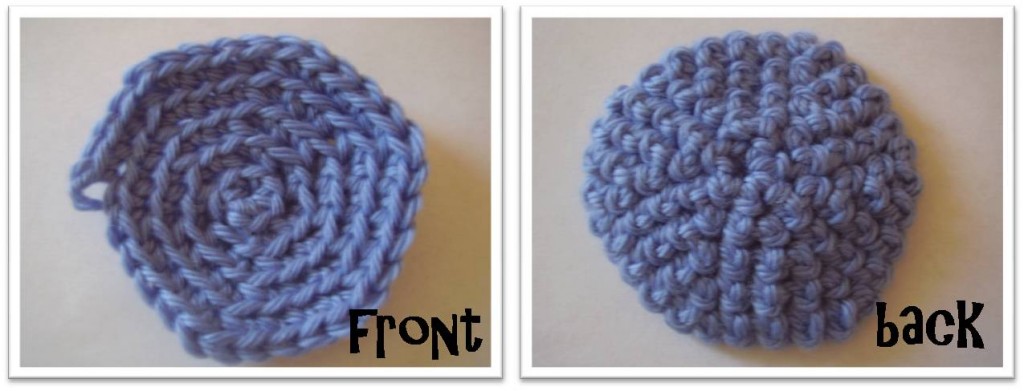
The above photo shows an example of working through the back loop only. Doing so creates a thinner than working through both loops. It also creates little ‘ridges’ on the front of the work that I really like. (you’ll notice that almost all FreshStitches patterns are worked through the back loops only). This technique does not leave very noticeable holes in the fabric, meaning that amigurumi can be made without a very small hook size. You will notice that the back of the fabric looks identical to the back of the sample that is worked through both loops.
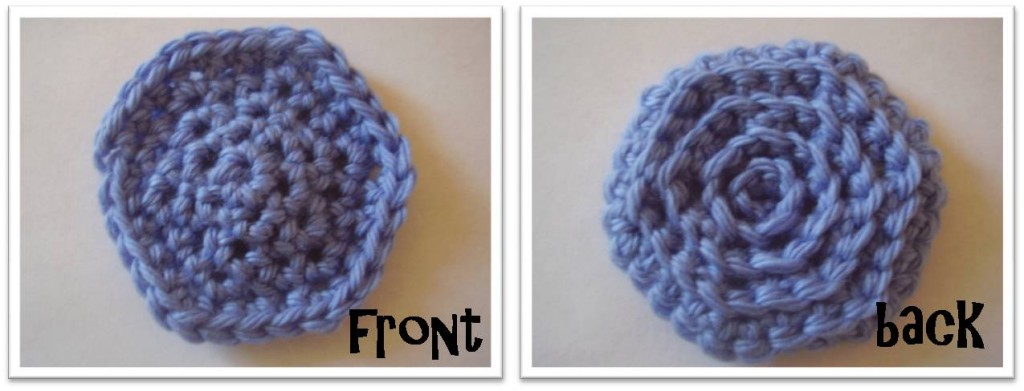
The above photo shows an example of working through the front loop only. Doing so creates a fabric of equal thickness to working through the back loop only. The front of the work looks similar to working through both loops. There are ridges created on the back of the work.
Working in Rows
When you work in rows, you’ll turn your work after every row. This means that you will see both the right and wrong sides of the stitches on alternate rows. The look is the same if you choose to work joined rounds while turning your work.
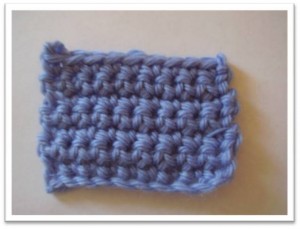
The above photo shows an example of working through both loops. Doing so creates a fabric that is slightly thicker than working through one loop alone, with no notable ‘ridges’ on the work.
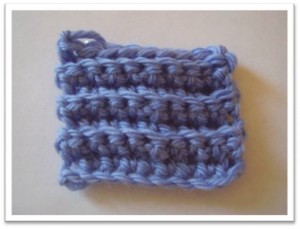
The above photo shows an example of working through the back loop only. Doing this technique in rows creates a ripple effect, and a very thick fabric.
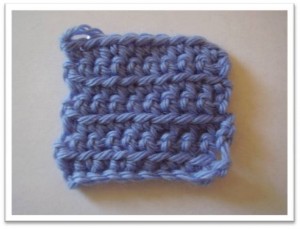
The above photo shows an example of working through the front loop only. You will notice ridges every other row in the fabric. This is the technique used in FreshStitches patterns, as the look matches most closely the look of working through the back loop in the round.
Which technique is your favorite?
Wow this explains alot! I was working in both loops with a small size hook and having a tough time because it was so thick. I will definately try working in the back loop only.
Thanks,
Mary Beth
I am working on a set of 3 dishcloths that say EASY, ya right. I am trying the learn a stitch – seed stitch, please help, also on the eyelet stitch. I can so so many other stitches except these.
I’m new to your website and have really been enjoying it so far. This is a great post. I’m a very analytical person so seeing these techniques side by side is really helpful. My experience has been that most patterns don’t specify which loops you should use. I thought I was doing something wrong because my projects always looked a bit different than the pictures. Thanks for the clarification.
Thank you, Kim, for your compliments and comment! 🙂
WOW. Sometimes I go through both loops, especially when I get a big loop or a “hole” on the top. I don’t know if anyone knows what I mean? For example, I’ve been making bookmarks out of “crochet thread” and it is hard to work with so I just go on top and go through both. I do flip over and I do not like the way it looks. This has really helped me to see how I can just crochet on one side and not turn over if I do not desire to do so at the end of each row. Thank you so much. Love this website. Thanks.
Thank you so much for this very clear explanation with pictures!
Thank you. I was looking for the reason why my first 2 fingerless gloves looked so different and I’ve just found it. I should have done front loop for straight and back loop for in the round.
I agree that working in the back loop creates a better-looking amigurumi and thank you for the tip! I am making a creature in the round and the “good side” is on the inside, so as I am completing the body, I will need to turn it inside-out. My question is, how to I crochet the rest of the body so that the stitches match? Thanks so much for your help.